2026 How to Utilize Elastic Fabric for Innovative Textile Solutions?
In the evolving world of textiles, "Elastic Fabric" stands out as a groundbreaking material. Industry expert Dr. Emily Carter notes, "Elastic Fabric allows for creativity and functionality simultaneously." This innovation leads to a fresh perspective on garment design.
Elastic Fabric is not just about comfort; it offers limitless possibilities. Designers can explore new shapes and structures. However, challenges remain. For instance, the sustainability of materials can be an issue. As we embrace this technology, it is vital to reflect on environmental impacts.
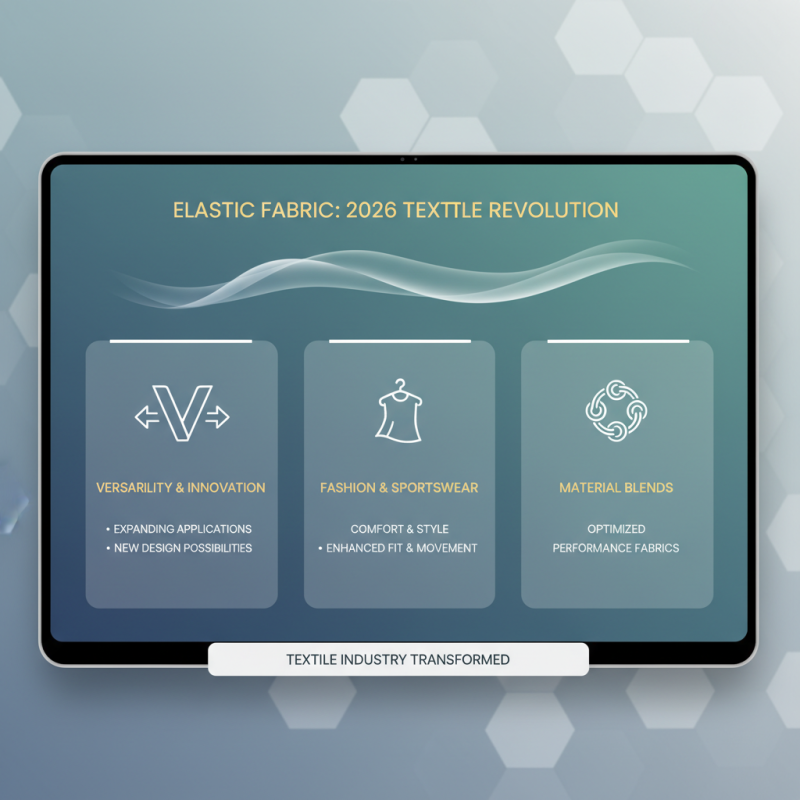
With potential uses in sportswear, fashion, and home textiles, Elastic Fabric can redefine our approach. Innovative techniques can improve performance and style. Yet, there’s a conversation to be had about accessibility and affordability. Balancing innovation with these considerations is crucial for the industry’s future.
Understanding Elastic Fabric and Its Properties
Elastic fabric is a remarkable material widely used in various textile applications. Its unique properties make it versatile. It offers flexibility, durability, and comfort. These characteristics stem from its ability to stretch and return to its original shape. This provides an ideal solution for clothing, upholstery, and activewear. Users often appreciate the snug fit that elastic fabric provides without compromising movement.
Beyond its physical attributes, elastic fabric encourages creativity in design. Designers experiment with textures and patterns. However, there are challenges to consider. The production process can be complex, and the quality varies. Selecting the right type for a specific purpose requires careful evaluation. Sometimes, the fabric may not perform as expected, leading to disappointment.
Innovation in elastic fabric applications is ongoing. There’s room for improvement in sustainability. Incorporating eco-friendly materials could present new opportunities. Many aspire to create more responsible textiles, but it isn’t always straightforward. The journey towards achieving that balance is crucial. Ultimately, understanding elastic fabric's nuances can inspire better design solutions.
2026 How to Utilize Elastic Fabric for Innovative Textile Solutions?
| Property |
Description |
Application Areas |
Advantages |
| Elasticity |
Ability to stretch and return to original shape |
Sportswear, activewear |
Improved fit and comfort |
| Breathability |
Ability to allow air and moisture to pass through |
Activewear, workout gear |
Keeps the user cool and dry |
| Durability |
Resistance to wear and tear over time |
Uniforms, outdoor gear |
Prolongs the lifespan of the product |
| Moisture Wicking |
Ability to draw sweat away from the body |
Athletic wear, undergarments |
Enhances comfort during physical activities |
| UV Protection |
Protection against harmful UV rays |
Swimwear, outdoor clothing |
Reduces risk of skin damage |
Innovative Applications of Elastic Fabric in Textiles
Elastic fabric offers exciting opportunities for innovative textile solutions. Its flexibility and durability make it ideal for various applications. Fashion designers increasingly explore ways to incorporate it into everyday wear. The stretch and comfort of elastic fabric can elevate simple designs into dynamic statements.
Tips: Consider using elastic fabric in athleisure and outdoor gear. It enhances movement and performance. Testing different weights of elastic materials can lead to surprising results.
In the home decor sector, elastic fabrics are revolutionizing furniture design. Slipcovers and cushions made from these materials are both practical and stylish. They can adapt to different shapes, offering versatility. Not all elastic fabrics are created equal, though. It’s essential to research fabric properties.
Tips: Look for sustainable options when sourcing elastic fabrics. Eco-friendly choices can resonate with conscious consumers. Always test the fabric before committing to a large project. You'll find some materials may not meet your performance expectations.
Innovative Applications of Elastic Fabric in Textiles
Techniques for Enhancing Elastic Fabric Performance
Elastic fabric offers incredible versatility and function in textile design.
To enhance its performance, understanding the properties of the materials used is vital.
Using high-quality fibers can improve stretch and durability.
These traits make elastic fabric ideal for sportswear and
activewear, where movement is crucial.
Tips: Always test the fabric before large-scale production. This will help identify strengths and weaknesses early on.
Consider blending different fibers for unique results. Experimenting with
different weaves can also yield unexpected benefits.
Another technique is to apply coatings to elastic fabrics. Coatings can enhance water resistance or add
breathability. However, be mindful that coatings may alter the fabric's
natural feel. Balancing performance with comfort can be tricky.
Not all fabrics work well with every coating.
Tips: Before deciding on a coating, conduct sufficient research. Gather feedback from potential users
to ensure satisfaction. A little experimentation can lead to significant breakthroughs in design.
Embrace the process of trial and error;
it often leads to the most innovative solutions.
Sustainable Practices in Elastic Fabric Production
Sustainable practices in elastic fabric production are essential for a greener future. The textile industry has long been criticized for its environmental impact. However, innovative approaches are beginning to emerge.
Using organic materials is one way to create elastic fabrics. Natural fibers can replace synthetic ones, reducing waste and pollution. Additionally, eco-friendly dyes and finishes lessen chemical exposure. These choices support both the environment and health.
Nevertheless, challenges remain. Sourcing organic materials can be difficult and costly. There is also the risk of compromising quality. Some may find it hard to balance sustainability with performance. This tension invites ongoing reflection and innovation. The journey towards truly sustainable elastic fabric is complex, but it is crucial for the industry's future.